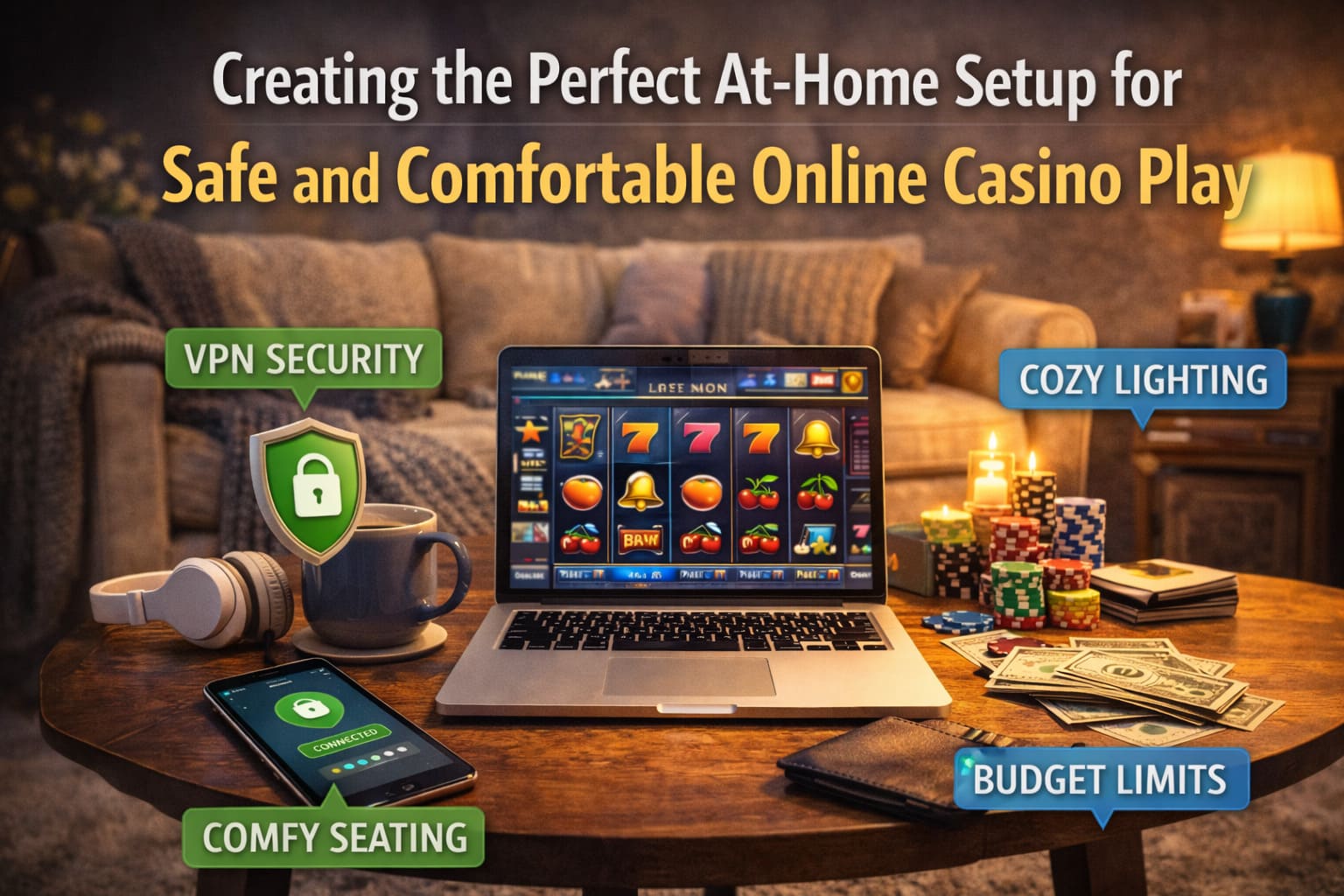

Picture this: it’s a Tuesday evening, you’ve settled onto the sofa with a laptop balanced on your knees, and you’ve opened an online casino for what you’re telling yourself will be a quick session. Twenty minutes in, your lower back is already making its opinion known, the screen glare is doing something unpleasant to your eyes, and your neighbor has apparently decided this is the perfect moment to watch an action film at volume. The cards keep coming. Your focus left a while ago.
Home play has a reputation for being the easy option — no travel, no noise, no fuss. And in some ways it is. But the home environment creates its own friction that people don’t anticipate. Posture collapses without the right support. Distractions pile up in ways that a focused environment wouldn’t allow. The line between “relaxing evening” and “deliberate session I’m paying attention to” dissolves faster than most people expect. The fatigue, physical and mental, tends to arrive quietly.
The best at-home setup for online casino play isn’t really about hardware. It’s about the full picture: physical comfort, privacy, concentration, and the environmental conditions that make responsible habits easier to maintain rather than harder. A well-considered space supports good decisions. A chaotic one erodes them.
When people are researching which platforms to try — comparing game libraries, reading user reviews, checking licensing — they typically move from aggregator sites to the platforms themselves. Somewhere like https://jackpot-jill.com/ is a common stop on that research trail, as are the responsible-play sections that reputable platforms publish alongside their game catalogues. What almost nobody spends equivalent time on is the physical and environmental setup they’ll actually be sitting in when they play. That gap is what this guide is about.
What follows is a practical look at building a home setup that’s genuinely comfortable, appropriately private, and designed to keep you in control of your session rather than the other way around.
Start With the Space
Where you sit shapes everything downstream. A desk in a reasonably quiet room gives you posture support, a degree of privacy, and a clear mental signal that you’re doing something deliberate. A kitchen table is workable but tends to be high-traffic and noisy. The sofa is comfortable for about twenty minutes before it quietly becomes a posture problem and a focus problem simultaneously. The bed is the worst option going — it’s wired in your brain to signals of passivity and sleep, which is exactly the wrong state for anything involving real decisions and real money.
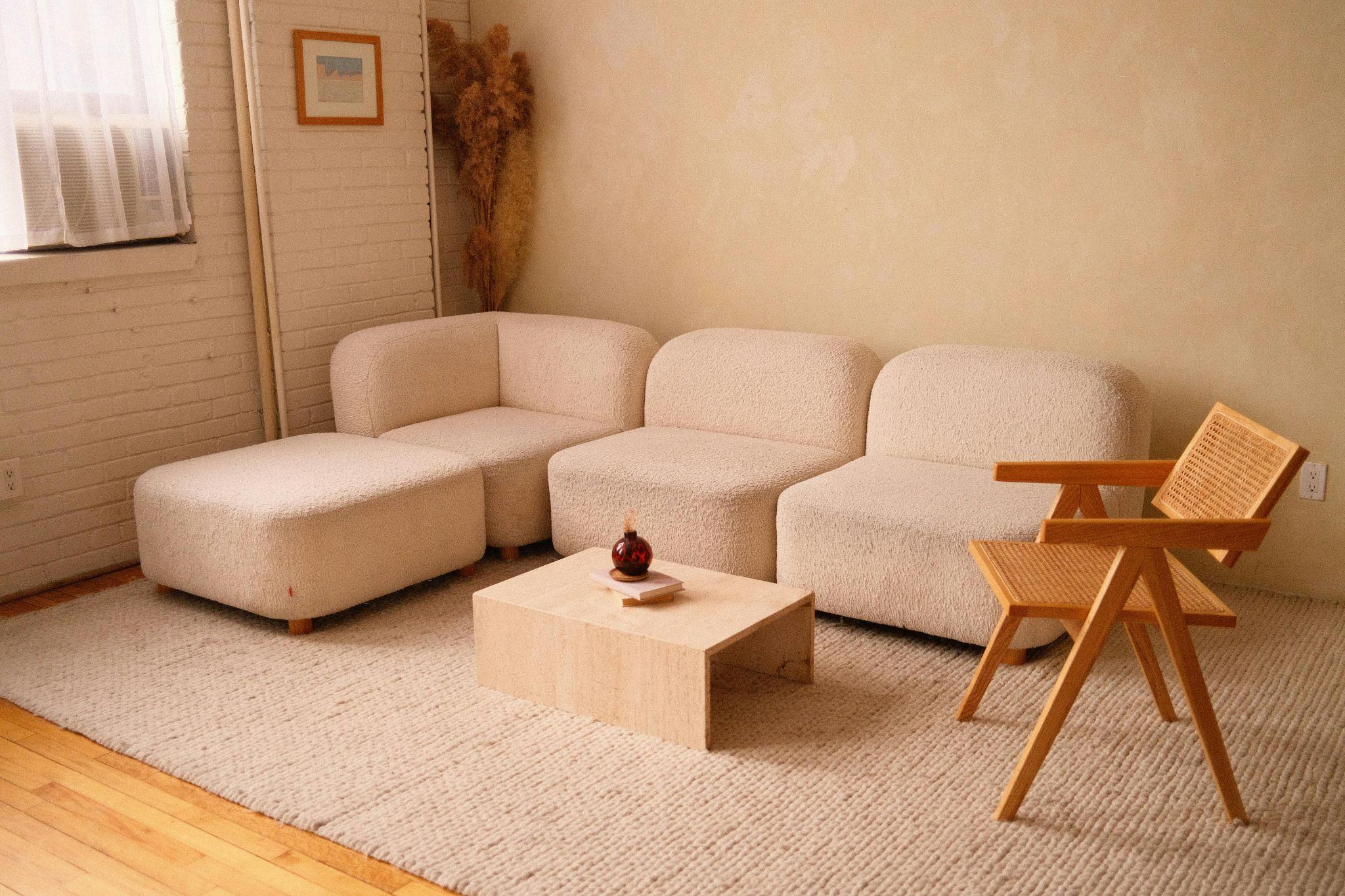
Privacy is worth thinking about carefully, not just as a security concern but as a basic comfort one. A living space where other people drift in and out, ask questions mid-session, or can plainly see your screen is a space that works against your concentration. If closing a door is an option, it’s worth using. If your desk faces a busy hallway, angle the screen. Small adjustments make a real difference over the course of an hour.
A cold room with harsh overhead lighting isn’t a neutral environment either. Temperature and ambient light affect alertness more than people realize, and a setup that feels fine for the first fifteen minutes can become genuinely draining as time passes. Getting the space right before you start is much easier than trying to fix it mid-session.
- A stable flat surface at roughly elbow height — no balancing acts
- A chair that supports your lower back without demanding effort
- Enough ambient light so your eyes aren’t constantly adjusting against screen glare
- Reasonable quiet, or the ability to use headphones without them feeling like a workaround
- A position that keeps your screen out of easy view from doorways or common areas
- Water within arm’s reach before you start
- Your phone silenced or face-down — not just nearby
- No TV running in the background
- A visible clock or a timer set before you open the platform
- Your session budget decided in advance, not in the moment
Comfort Is More Than a Chair
The chair matters, but it’s only one piece. What most people don’t notice is how posture degrades progressively over a session. You start upright and end up with your neck craning forward, shoulders rounding, and lower back doing something it really shouldn’t. By ninety minutes in, the body is in low-level discomfort that affects your mood and your judgment — even if you’re not consciously aware of it. That is where a lot of “why did I keep playing past my limit” moments actually come from.
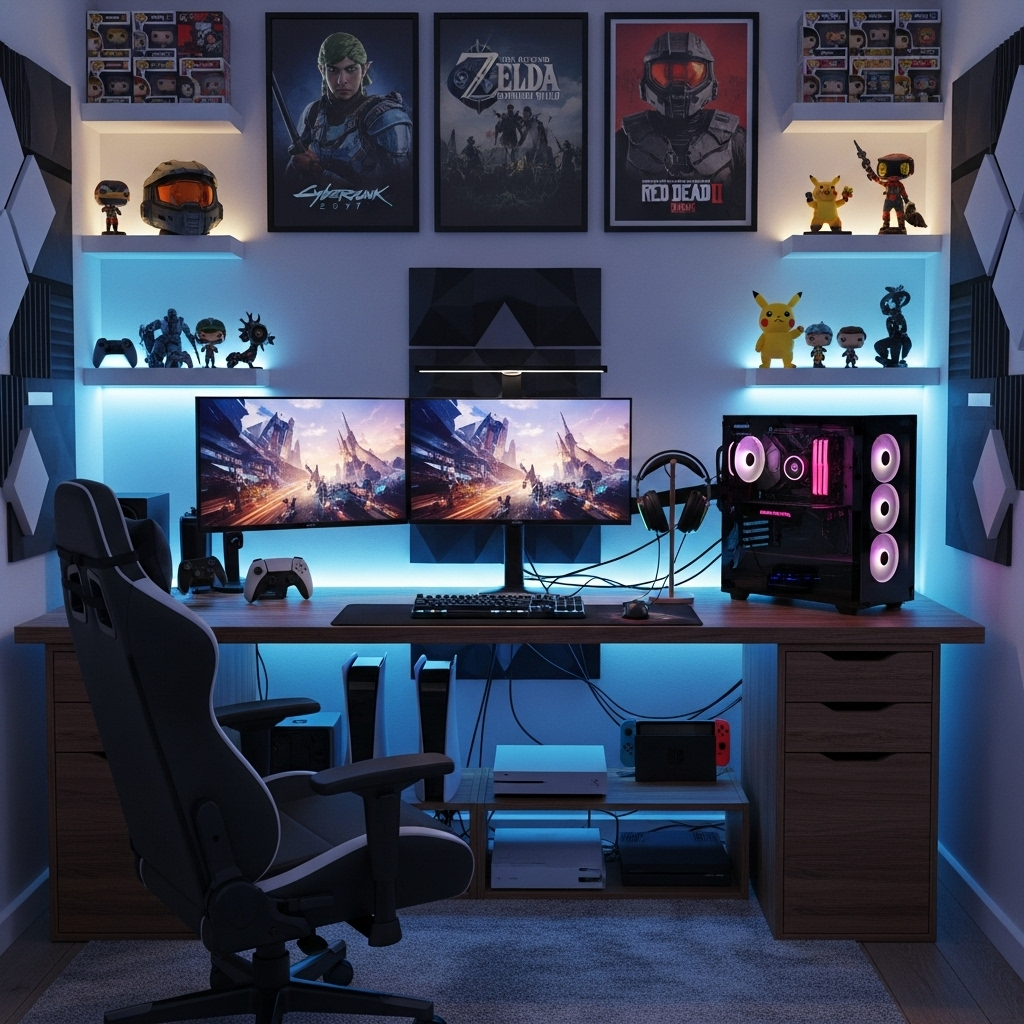
The basics are straightforward. Feet flat on the floor or a footrest. Elbows at desk height so your wrists stay roughly level. Screen at or just below eye level — looking up tightens your neck; looking sharply down does the same thing over time. If you’re on a laptop at a desk, a separate keyboard and a simple stand to raise the screen costs very little and makes a noticeable difference inside the first fifteen minutes of use. A laptop sitting on a blanket or pillow, meanwhile, blocks the vents and heats up fast — something worth knowing if your machine starts running loud and slow mid-session.
Getting up every forty-five minutes or so isn’t just good for your back. It resets your attention. A quick stretch, a short walk, two minutes away from the screen. It sounds almost too simple to mention, which is probably why most people skip it. Don’t skip it.
Lighting and Screen Comfort
Eye strain is the problem nobody talks about until they have a headache. A bright screen in a dark room forces your eyes into constant adjustment against the contrast. Glare from a window positioned behind or in front of the monitor creates a similar effect. Neither is comfortable past the first hour, and both quietly accelerate fatigue in ways that bleed into your decisions.
Warm, indirect lighting that roughly matches your screen brightness is the practical goal. Not a bare overhead bulb. Not pitch dark. A lamp positioned to the side — not directly behind the screen — is a reasonable starting point for most setups. On the screen itself, most devices now have a warm-tone or night mode that reduces blue-light output; it’s worth switching on in the evening, even if the initial colour shift takes a few minutes to get used to. The 20-20-20 rule is simple and worth keeping in mind: every twenty minutes, look at something roughly twenty feet away for twenty seconds. Your eyes will thank you by the end of the session.
| Setup element | Why it matters | Common mistake | Better option |
|---|---|---|---|
| Room lighting | Prevents harsh contrast between the bright screen and dark surroundings | Playing in a completely dark room with only the screen for light | Soft lamp to the side, roughly matching screen brightness |
| Screen brightness | Too high causes glare; too low causes squinting and strain | Leaving auto-brightness on and ignoring it | Manual adjustment to suit your room’s ambient light |
| Blue-light filter | Reduces evening eye fatigue and disruption to sleep after the session | Skipping it because the colour shift looks odd at first | Enable from late afternoon onwards; you adjust quickly |
| Screen glare | Forces constant micro-adjustments that tire the eyes faster than you’d expect | Window directly behind or opposite the monitor | Angle the screen or use blinds to control the light source |
Internet Stability and Device Reliability
A dropped connection mid-hand is frustrating in a way that’s hard to fully describe. Most platforms handle disconnections server-side, so the round typically resolves correctly — but you’re left unable to verify that immediately, and the experience creates a kind of low-level stress that colours the rest of the session. A stable connection is basic reliability for anything involving real money, not a premium extra.
If Wi-Fi signal is weak in your chosen room — and in many flats and houses, there’s always one corner that gets poor signal — a wired ethernet connection is almost always more stable. A powerline adapter threads ethernet through your home’s existing electrical wiring without cable runs across the floor. Not glamorous, but effective. If that’s not practical, moving closer to the router or using a Wi-Fi extender solves most signal problems for a modest outlay.
Device temperature is something people ignore until it becomes obvious. A laptop running hot, fan audible across the room, is one that’s throttling its performance. Playing on a machine that’s simultaneously downloading a system update, buffering a video in another tab, and running from a low battery makes lag during play much more likely. Close what you don’t need, keep the device plugged in, and make sure it’s sitting on a surface that doesn’t block the vents — not a bed, not a sofa cushion.
Privacy and Account Safety
Playing from home doesn’t automatically mean playing privately. Anyone who can see your screen — a housemate walking past, a partner glancing over — can see your account balance, your deposit details, your login credentials. In a shared flat or family home, that’s worth taking seriously. Screen positioning is the simplest fix: angle your monitor so it’s not visible from the main flow of foot traffic. A physical privacy filter, which attaches to your screen and narrows the viewing angle, is cheap and works well for shared spaces.
Account security is a separate matter, though it overlaps with the same concern. Online casino accounts hold payment information and personal data. A recycled password, a shared device with saved credentials, or a browser that helpfully auto-fills your login when someone else is using your laptop are all genuine risks — the kind that feel unlikely until they aren’t.
- Use a unique, strong password — not one you’ve used anywhere else
- Enable two-factor authentication wherever the platform offers it
- Never save passwords in a shared browser profile
- Log out fully after each session, not just close the tab
- Avoid playing on public Wi-Fi or networks you don’t control
- Lock your device when you step away, even for a few minutes
- Keep your screen angled away from high-traffic areas of the room
- Avoid using a shared household computer for a personal financial account
Payment Hygiene and Boundaries
The ease of depositing money from home is a double-edged thing. When your payment details are already saved and a top-up takes three clicks, the friction that might otherwise give you a moment to pause is gone. That absence of friction is where impulsive top-ups tend to happen. Deliberately keeping a little inconvenience in the process — having to re-enter card details, waiting for an SMS confirmation — creates a small but real pause that lets better judgment catch up with impulse.
One-method discipline is underrated. Choosing a single deposit method, setting up transaction notifications through your bank, and fixing your session budget before you log in are habits that keep your spending visible to you rather than abstract. When players start switching between payment methods to sidestep deposit limits they set themselves, that’s a reliable signal that the session has moved somewhere it shouldn’t be.
| Habit | Why it helps | What usually goes wrong |
|---|---|---|
| Fixing your session budget before logging in | Removes in-session decision-making under pressure, when judgment is at its worst | Setting a “rough” limit and then negotiating with yourself mid-session |
| Bank transaction notifications | Keeps spending concrete and visible in real time | Turning them off because they feel intrusive |
| Using a single deposit method | Reduces easy workarounds when you’ve hit your own limit | Switching to a second method after the first runs out |
| Withdrawing winnings promptly | Reduces the pull to re-spend what you’ve won | Leaving funds on the platform “for next time” — which rarely ends cleanly |
Distraction Control
Online casino play requires genuine attention. Not intense concentration, but enough that half-playing while also watching a series, fielding group chat messages, and periodically checking social media isn’t really playing — it’s just spending money while distracted. Distracted sessions tend to run longer and cost more, not because the player deliberately chose that, but because the mental signals that normally say “time to stop” aren’t functioning properly when your attention is split three ways.
Notifications are the most consistent culprit. A group chat buzzing every few minutes, a browser tab flashing a badge, a video autoplaying in a corner of the screen — each pull is small, but they add up. The fix isn’t complicated: silence non-essential notifications before you start, close unrelated tabs, and put the phone face-down or in another room if you notice yourself reaching for it between rounds. It takes thirty seconds and makes the session significantly more coherent.
Background TV deserves its own mention. Most people treat it as harmless ambient noise, but it creates a low-level processing demand that runs the whole time. You’re not watching it, but part of your brain is handling it anyway. A music playlist or steady ambient audio is a much better background for anything that involves making decisions.
Responsible Session Design
A session without a defined end point ends when something external stops it — the money runs out, exhaustion sets in, or a notification breaks the spell. None of those are good stopping points, and none of them involve you making a deliberate choice. The sessions that go well are usually the ones where the exit conditions were decided before the session started, not after an hour of play.
Set a specific time limit before you log in, and set an actual alarm rather than a mental note. Keep water at your desk; dehydration contributes to fatigue and poor judgment faster than most people realise, especially in the evening. Build in a physical break at the halfway point. Decide in advance what your stop-loss looks like — a specific amount at which you close the platform regardless of what’s happening, because trying to make that call mid-session, when you’re already deep in it, is setting yourself up to make it badly.
Resources like BeGambleAware offer clear, practical guidance on recognising when play has shifted from entertainment into something worth paying closer attention to. Worth knowing they exist before you ever feel like you need them.
- Set a specific end time before opening the platform — use an actual alarm, not a mental note
- Decide your session budget in advance; write it down if that helps make it feel fixed
- Keep water at your desk; skip alcohol during sessions
- Take a proper standing break at the halfway point — not just a stretch in your chair
- Define a stop-loss amount and treat it as non-negotiable
- When you hit your loss limit, close the platform. No “one more round.”
- If you’re tired, frustrated, or stressed, don’t start a session at all
- Use the platform’s deposit limits and session timers where they’re available
- Play only on licensed platforms that operate within your local regulations
- Check in with yourself at the halfway point: is this still something you’re choosing to do, or just momentum?
Solo Setup vs Shared Home
Living alone simplifies most of this. You control the noise, the screen visibility, and whether anyone walks in mid-session. Most people, though, share their home — with a partner, housemates, family, or kids — and that changes the practical considerations in ways that are worth thinking through rather than just improvising around.
Privacy in a shared space requires more active management. A partner walking in mid-session, a housemate who needs to use the shared desk, a child appearing at the door — all of these break concentration and can create tension if the activity feels like something that’s being conducted in a corner rather than openly acknowledged. Being clear with yourself about when you’re in a session, how long it will last, and what your limits are makes it much easier to keep the activity proportionate and contained. If you live with others, a quick “I’m doing something for an hour, can we catch up after?” is less awkward than it sounds and avoids most of the interruption problem.
Shared devices need careful handling. A household laptop with everyone’s browser history, saved passwords, and profiles mixed together is not the right place for a personal account that holds payment information. If a dedicated device isn’t an option, a separate browser profile that other household members don’t have access to is a basic minimum.
A Simple Setup Checklist
Most sessions that go sideways start impulsively — someone sits down without thinking through time, money, or environment. A short pre-session routine sounds like admin, but it takes about ten minutes and removes most of the conditions that lead to regret later.
| Before play | During play | After play |
|---|---|---|
| Set your session budget and time limit | Take a real break at the halfway mark | Log out fully — don’t just close the tab |
| Silence phone notifications | Drink water; avoid alcohol | Note roughly how long you played and what you spent |
| Close all unrelated browser tabs | Check your timer when you think you’re about halfway through | Lock your device before you step away |
| Adjust screen brightness and enable warm-light filter if it’s evening | Don’t chase losses past your pre-set limit | Withdraw any winnings you want to keep — don’t leave them sitting on the platform |
| Fill a glass of water and place it on the desk | Stay focused on one thing — no multitasking | Step away from the screen for at least ten minutes before doing anything else |
- Pick your space and confirm it’s reasonably quiet and private
- Sit properly — screen at eye level, elbows at desk height, feet flat on the floor
- Set a timer or alarm for your planned session end time
- Silence your phone; close tabs you don’t need
- Confirm your session budget before you open the platform — not after
- Adjust screen brightness; turn on the blue-light filter if it’s evening
- Put water within reach
- Open the platform. Your limits are already set. Start.
Wrapping Up
A good at-home setup isn’t expensive or complicated. It’s a chair that supports you, lighting that doesn’t strain your eyes, a stable enough connection that you’re not second-guessing what just happened, and — most importantly — a session that begins with the important decisions already made. Time, budget, stop-loss. Sorted before you log in, not negotiated mid-play.
The environments that work best tend to be the simpler ones. Fewer distractions means clearer thinking. Pre-set limits mean fewer impulsive choices. Physical comfort means you’re not pushing through fatigue as an excuse to keep going. The setup isn’t separate from responsible play — it’s part of it.
The best session is one you walk away from feeling like you were in control the whole time — because you were.